


This article debunks myths about falling asleep at the breast, explaining its benefits from neurological development and emotional security perspectives.
One of the most common questions we receive in the field of infant sleep is: “Is it bad if my baby falls asleep at the breast?” This concern often arises from a culture that values early independence and promotes the idea that the baby should learn to sleep “alone” as soon as possible. However, this perspective does not always align with babies’ neurological, emotional, and developmental needs.
The goal of this article is to debunk myths around falling asleep at the breast, explain its benefits based on scientific evidence, and offer peace of mind to families who choose to follow their instinct and their baby’s rhythm.
Myth 1: “If they fall asleep at the breast, they will never learn to sleep alone.”
One widespread belief is that if a baby falls asleep at the breast, they will get “used to it” and never learn to sleep without help. This idea comes from a behavioral view of infant sleep that tries to shape behavior through repetition and progressive detachment. However, current neurodevelopment studies show that autonomous sleep is not taught, but matures over time.
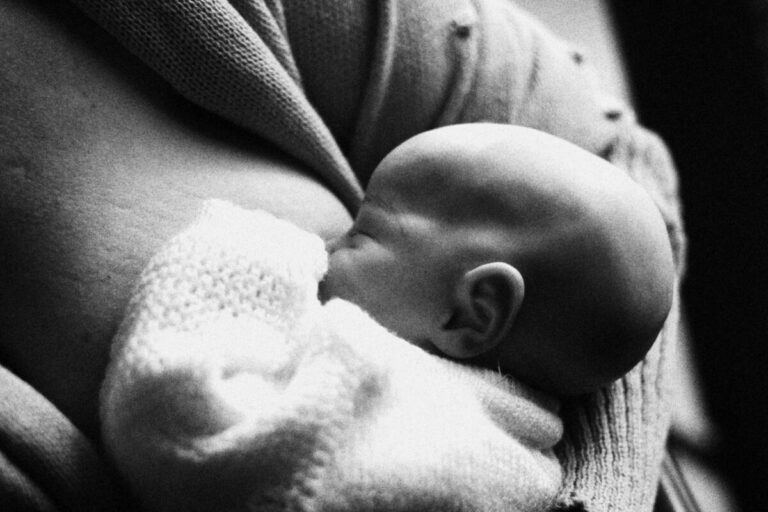
Babies’ nervous systems are immature at birth. Falling asleep in arms, at the breast, or next to their caregivers is not only natural but also beneficial. Breastfeeding activates biological processes that facilitate sleep: sucking at the breast stimulates the release of oxytocin (the “love hormone”) and prolactin, which induce relaxation in both baby and mother. Additionally, breast milk contains tryptophan, a precursor of melatonin, a key hormone for sleep.
Autonomy is not forced, it is built
Forcing a baby to fall asleep without help can cause stress, anxiety, and disrupt their relationship with rest. On the contrary, accompanying the baby through the sleep process fosters an emotional security base from which, later on, when mature, the baby can naturally and peacefully detach.
Myth 2: “Falling asleep at the breast is a bad sleep association”
The term “sleep association” has gained popularity in books and social media but often causes confusion. From an evolutionary perspective, all humans have sleep associations: some need a blanket, others a routine or a particular position. For babies, falling asleep at the breast is a completely physiological and adaptive association.
The breast is not only food but also comfort, emotional regulation, and physical contact. At the most vulnerable stage of life, where the baby fully depends on the adult, these associations are not harmful but respond to a basic need: feeling safe.
Benefits of falling asleep at the breast
Far from being a “bad habit,” falling asleep at the breast has many benefits:
- Neurological development
During skin-to-skin contact and sucking, a physiological synchrony is produced between mother and baby. Heart rate, body temperature, and cortisol levels are regulated. These repeated moments of calm and security contribute to the development of a more resilient nervous system with better self-regulation capacity in the future.
- Secure emotional bond
Falling asleep at the breast strengthens attachment, an emotional bond that directly influences the child’s future emotional health. Secure attachment is built through the adult’s sensitive and consistent response to the baby’s needs. Responding to crying, soothing with the breast, rocking… all these responses nurture the baby’s basic trust in their environment.
- Stress reduction
Several studies show that breastfed babies have lower cortisol levels in stressful situations. Falling asleep at the breast is a natural way to manage the transition from alertness to rest.
- Facilitates maternal rest
Although some mothers worry about how often their babies ask to nurse to sleep, many find that safe co-sleeping and night breastfeeding allow for more continuous and less interrupted rest. Falling asleep at the breast can become an effective tool to quickly return to sleep after nighttime awakenings.
What if I want to make changes?
It is important to highlight that falling asleep at the breast is not mandatory or exclusive. Every family is unique, and so are their needs. If at some point the mother feels she wants to change how her baby falls asleep, she can do so respectfully, without applying methods that involve crying, disconnection, or abrupt separation.
There are gentle transition strategies, such as including other attachment figures in the nightly routine, introducing stories or songs, and promoting contact without breastfeeding during falling asleep. The key is to accompany the process with sensitivity, respect, and understanding of the child’s developmental rhythm.
Falling asleep at the breast is not bad; it is in their nature
Falling asleep at the breast is an ancestral, biological, and deeply human practice. It is not a weakness, mistake, or lack of limits. It is an expression of the caregiving instinct and a powerful connection tool.
As a psychologist and infant sleep advisor, I encourage families to observe their children not from fear of “bad habits,” but from understanding their real needs. Independence is not taught by removing supports but by offering security from which they can explore the world and later rest by themselves.
If your baby falls asleep at the breast, breathe calmly. You are not spoiling them. You are nurturing them in body, mind, and heart.